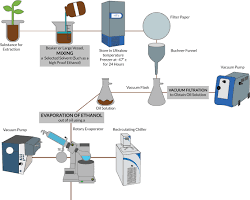
This course provides a theoretical and practical foundation in the methodologies used to isolate, concentrate, and purify biomolecules (proteins, nucleic acids, lipids, and secondary metabolites) from complex biological matrices (cells, tissues, and plant extracts).
- Enseignant: Youcef ABISMAIL
In this course, we focus on the tight structure–function relationship: how proteins, lipids, carbohydrates, and hormones assemble into complexes (glyco‑, lipo‑, phospho‑, chromoproteins, lipid assemblies, polysaccharides, hormonal systems) that determine capacities for recognition, transport, signaling, and catalysis.
Across scales, these complexes act by binding specific partner molecules; this interaction may either be the main function (recognition, targeting) or be coupled to a chemical transformation of the ligand. We will see how their structural features govern both interaction specificity and the diversity of reactions essential to life.
- Enseignant: Mustapha TAIEB BRAHIM
- Enseignant: أحمد حيرش